

After the Bolshevik revolution, between 1 to 2 million people left Russia over three years. Up to a hundred thousand ended up in the Kingdom of Serbs, Croats and Slovenes. This influx of people certainly wasn’t trivial for a country with a small population. Russian emigration certainly left a very notable mark in the capital city of Belgrade. Was it a good or bad mark? Let’s walk around, observe and figure it out for ourselves.
Why did most Russian emigrants settle here? What are Nansen passports and why are they being mentioned again today? How did Serbia dare to do what even stronger countries never would – to host a fully-trained and even partially-weaponised army of another country? Let’s find out! And while we do, let’s try to solve a challenging question – how would you organise such an army in exile in a way that it would not:
– overthrow anyone,
– conquer parts of the country,
– or starve to death.
That’s what makes it such a wonderful country! Join us!
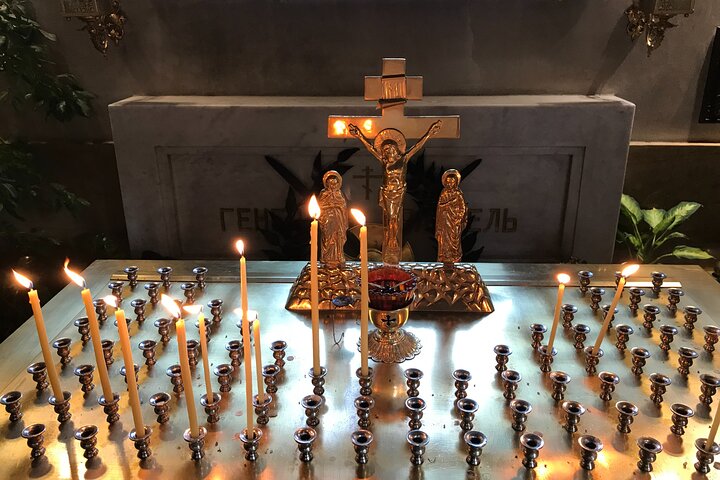
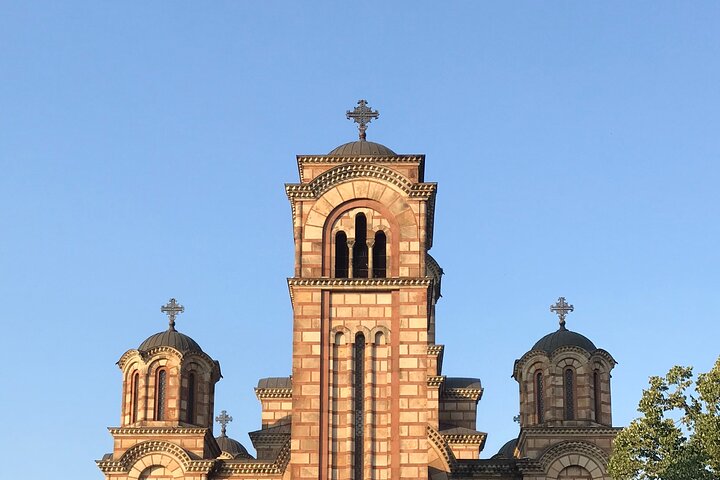
We will walk to the Russian church where Baron Wrangel is buried.
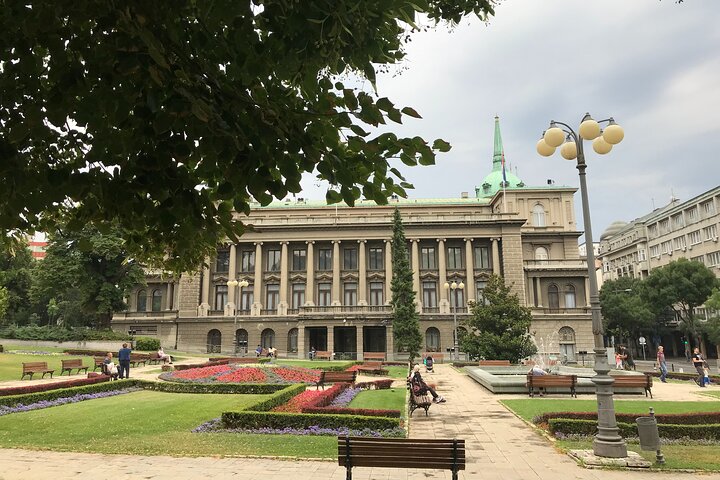
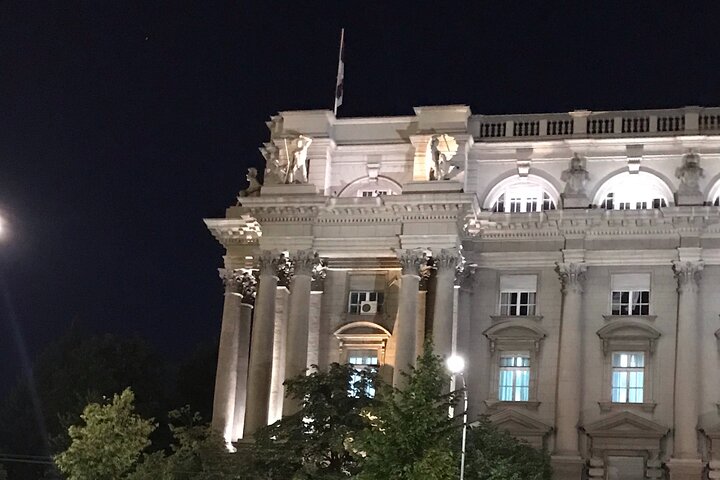
While walking through a picturesque, formerly royal park, we will look for a "Russian footprint" in the city's architecture: we will see the Serbian Parliament and the buildings of the post office, the General Staff and ministries. We will talk about the contribution of Russian architects to Belgrade's current appearance and why this is not acknowledged quite so straightforwardly.
We will pass by the Royal Palaces and the monument to Nicholas II. And this is a wonderful opportunity to talk about the special relationship between these two dynasties.
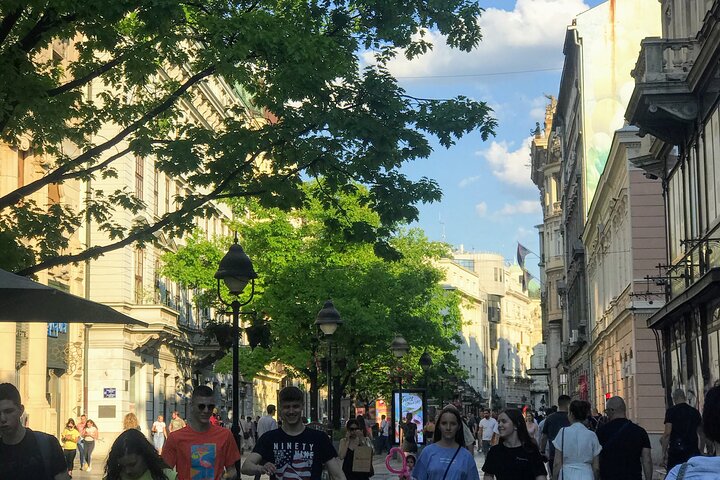
We'll take a walk down a street that used to be filled with craft workshops and is now taken over by designers. In the luxurious interiors of the "Moskva" Hotel, we'll have a coffee and try the "Moskva" and "Aurora" cakes, prepared according to a half-century-old recipe. And while we're there, why not take a peek at Belgrade's beau monde?!
We will walk to the National Theatre, where Russian ballerinas performed and scenic designers, choreographers, and directors worked. We will learn about "street songs" and find out who is worth remembering with kind words whenever you hear a choir singing in Serbia.
We will see Belgrade University and the Academy of Sciences and Arts, and we will talk about the fate of emigrant scientists.
We will visit the Gavrilo Princip square and talk about the role of the First World War and this incident's role in world history. And, of course, we will visit many places that Russian emigrants would visit a century ago. Places that still stand today and are open for us to visit!
See available dates and the current price on Viator.
The information provided above is compiled from tour operator listings and customer reviews for informational purposes only. Tour details, pricing, inclusions, and availability are subject to change without notice. We strongly recommend that you verify all current information, including tour schedules, prices, cancellation policies, and specific requirements directly with the official tour provider before making any booking decisions. While we strive to keep this information accurate and up-to-date, we cannot guarantee the completeness or accuracy of all details. Please check the official tour page for the most current information and terms of service.