
Serbia Travel Tips: What to Know Before You Go
These Serbia travel tips cover the practical side of a trip: entry rules, money, transport, safety and public holidays. Serbia is not in the EU and not in the Schengen area, so a few rules work differently from the rest of Europe. Here are the things to know before visiting Serbia, in one place.
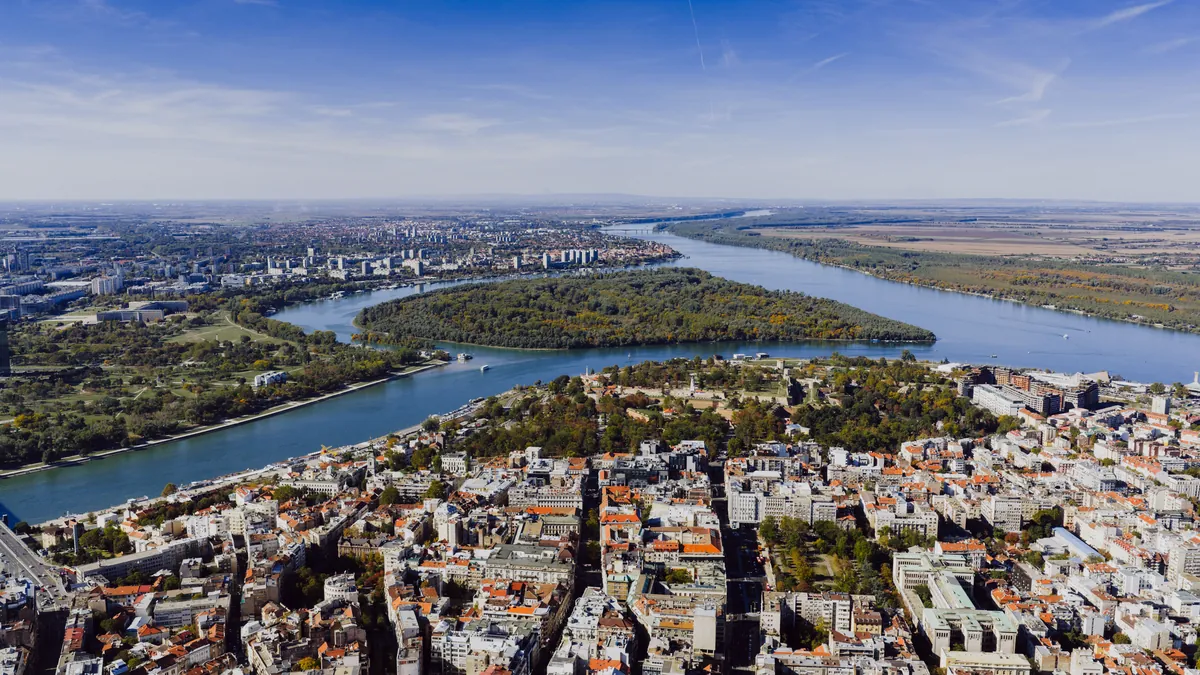
Serbia at a Glance
| Capital | Belgrade |
|---|---|
| Currency | Serbian dinar (RSD). The euro is not the official currency. |
| Language | Serbian, written in both Cyrillic and Latin letters |
| Time zone | Central European Time (GMT+1). Summer time GMT+2, from the last Sunday in March to the last Sunday in October. |
| Population | About 6.6 million (2022 census) |
| Plugs | European two-pin plugs (type C and F), 230 V |
| Emergency numbers | Police 192, fire 193, ambulance 194 |
| Country code | +381 |
| EU and Schengen | Serbia is in neither |
Entry Rules
Documents
Citizens of EU countries, Switzerland, Norway, Iceland, Bosnia and Herzegovina, Montenegro and North Macedonia can enter with an ID card only. Everyone else needs a valid passport.
How long you can stay
Visa-free visitors, including citizens of the EU, UK, US, Canada and Australia, can stay up to 90 days in any 180-day period. Days spent in Serbia do not count toward your Schengen days. The visa-free list can change, so check it with the Serbian Ministry of Foreign Affairs before you travel.
Police registration
Every foreigner must be registered with the police within 24 hours of arrival. Hotels and registered accommodation do this at check-in and give you a white card (“bela karta”). In private accommodation, the host must register you. Some short-term rental hosts don’t, so ask.
EES and ETIAS
The EU Entry/Exit System (EES), running since 10 April 2026, does not apply when you enter Serbia. Neither does the UK ETA. EES applies when you cross from Serbia into the Schengen area. ETIAS has not started.
Entering from Kosovo
You can’t enter Serbia directly from Kosovo unless you first entered Serbia from another country and have a Serbian entry stamp.
Cash limit
Cash over €10,000, or the same amount in another currency, must be declared at customs.
Money
Pay in dinars. Payment cards are widely used. For a sense of everyday costs, read how expensive Belgrade is.
- Tourist tax: in Belgrade it is 240 dinars per person per night since 15 October 2026 (it was 160). You pay it at your accommodation. Other towns have their own rates.
- Tipping: it is not obligatory. It is a personal choice.
To estimate the cost of your whole trip, use the Serbia trip cost calculator.
Phone and Internet
EU “roam like at home” does not cover Serbia yet. The EU opened negotiations with Serbia and other Western Balkan countries in November 2026, but there is no start date. Check roaming prices with your operator, or use a local SIM or eSIM.
Getting Around
Belgrade public transport
City buses, trams, trolleybuses, night lines and BG Voz city trains in Belgrade are free for everyone, tourists included, since 1 January 2025. You don’t need a ticket.
Two services are not free:
- The A1 airport minibus: 400 dinars, paid in cash to the driver.
- Express “E” minibuses: about 200 dinars.
Trains
Fast Soko trains take about 36 minutes from Belgrade to Novi Sad and about 80 minutes to Subotica. Seat reservation is compulsory. The fast line makes a day out with Novi Sad tours easy to plan.
Taxis
Overcharging is common. Use a ride-hailing app (CarGo and Yandex work in Belgrade) or the official fixed-price taxi at the airport.
Arriving at Belgrade Airport
Belgrade Nikola Tesla Airport has three ways into the city.
Fixed-price taxi
- Get a voucher at one of the e-kiosks. There are three in baggage claim and one in the arrivals hall.
- Take the first taxi at the stand outside Arrivals.
- The price depends on the city zone and covers up to 4 people.
- The driver must charge only the price on the voucher.
Avoid taxi drivers who approach you in the arrivals hall. If you want a driver waiting for you, look at Belgrade airport transfer options.
A1 minibus
The A1 goes to Slavija Square. It costs 400 dinars, cash in dinars only, and takes about 30 minutes. It runs roughly every 20 minutes during the day. The last departure is at 01:00.
City bus 72
Bus 72 goes to Zeleni Venac. It is free, like all city buses.
Driving
The key rules are below. For more, read the full guide to driving in Serbia.
- No vignette. Motorways have tolls: take a ticket when you enter and pay when you exit. Pay in dinars or by card (Visa, Mastercard, Maestro). A toll tag gives a discount. Euros may not be accepted at every booth, so carry dinars.
- Speed limits, unless signs say otherwise: 50 km/h in towns, 80 km/h outside towns, 100 km/h on expressways, 130 km/h on motorways.
- Headlights on at all times.
- Alcohol limit: 0.2 g/l. Zero for new and professional drivers.
- From 1 November to 1 April, winter tyres are required when there is snow or ice. Carry snow chains.
- Required in the car: warning triangle, first aid kit, reflective vest and spare bulbs.
- Check that your car insurance covers Serbia.
If you’d rather not drive, a private driver in Serbia is another option.
Health and Safety
- Tap water is safe to drink.
- Serbia is not in the EU, so don’t count on the European Health Insurance Card. Get travel insurance. Hospitals often ask for payment up front.
- Pickpocketing is the most common crime in tourist areas.
- Demonstrations happen and can turn violent. Avoid them.
- If you are not a fan, avoid the big Partizan – Red Star football derbies.
- Unexploded ordnance may remain in some rural areas near the Kosovo border. Stay on marked paths.
- Flying a drone needs prior permission.
For a fuller picture, read is Serbia safe to visit.
Public Holidays 2027
- 1–2 January: New Year
- 7 January: Orthodox Christmas
- 15–16 February: Statehood Day
- 30 April – 3 May: Orthodox Easter (Good Friday to Easter Monday)
- 1–2 May: Labour Day (overlaps with Easter)
- 11 November: Armistice Day
Many offices and some shops close on public holidays.
When to Go
- Summer (June–August): hot. It’s festival season, opening hours are longest, and all boat trips on the Danube are running.
- Spring and autumn: mild. Good for wine regions and walking.
- Winter: cold. There’s skiing at Kopaonik, and Christmas is celebrated on 7 January.
For more detail, see the guide to the best time to visit Serbia, and check what to pack for Serbia for each season. To plan trips out of the capital, use the Serbia day trip planner or browse day tours from Belgrade.
Facts checked: November 2026.
Frequently Asked Questions
Do I need a visa to visit Serbia?
Citizens of the EU, UK, US, Canada, Australia and some other countries can visit without a visa for up to 90 days in any 180-day period. The list can change, so check with the Serbian Ministry of Foreign Affairs before you travel.
Do days in Serbia count toward my Schengen 90 days?
No. Serbia is not in the Schengen area, so days spent there do not count toward your Schengen days.
Can I pay in euros in Serbia?
The euro is not the official currency. Pay in Serbian dinars (RSD). Payment cards are widely used.
Is public transport in Belgrade free?
Yes. Since 1 January 2025, city buses, trams, trolleybuses, night lines and BG Voz city trains are free for everyone, tourists included. Not free:
- A1 airport minibus: 400 dinars, cash
- Express “E” minibuses: about 200 dinars
How do I get from Belgrade airport to the city center?
- Fixed-price taxi: get a voucher at an e-kiosk, then take the first taxi outside Arrivals.
- A1 minibus to Slavija Square: 400 dinars, cash in dinars only, about 30 minutes.
- City bus 72 to Zeleni Venac: free.
Does EU roaming work in Serbia?
No. EU “roam like at home” does not cover Serbia yet, and there is no start date. Check prices with your operator, or use a local SIM or eSIM.
Can I drink tap water in Serbia?
Yes, tap water in Serbia is safe to drink.
What are the emergency numbers in Serbia?
- Police: 192
- Fire: 193
- Ambulance: 194