
Kalemegdan: A Visitor’s Guide to Belgrade Fortress
This post contains affiliate links. If you book through them, we may earn a commission at no extra cost to you.
Kalemegdan is the park and old fortress on a hill above the point where the Sava flows into the Danube, right at the edge of central Belgrade. Entry to the park and the fortress grounds is free, and the walls, towers, churches and viewpoints are all within a short walk of Knez Mihailova Street. Plan one to two hours for a walk, or half a day if you want to see the museums too.
People often use one name for the whole area, but there are two parts. Belgrade Fortress is the fortified complex itself, split into the Upper Town and the Lower Town. Kalemegdan Park is the green space around it. The name comes from two Turkish words: “kale” (fortress) and “megdan” (field or battlefield). This guide covers the history, what to see, how to get there and when to go.
A Short History of Belgrade Fortress
The hill at the confluence of the Sava and Danube rivers has been fortified for more than 2,000 years. The Romans built a military camp here and called the town Singidunum. After them came Byzantines, Bulgarians, Hungarians, Serbs, Ottomans and Austrians. Each of them fought for the hill, tore down parts of the fortress and built new ones.
That is why the walls look the way they do today. Most of what you see comes from the 18th century, when the Austrians and Ottomans rebuilt the fortress for artillery. But medieval towers and gates, Ottoman tombs and Roman remains are mixed in with it. After the Ottoman army left in 1867, the area around the walls was slowly turned into a public park. Today the whole fortress is a protected cultural monument.


What to See at Kalemegdan
The main sights are spread between the Upper Town on top of the hill and the Lower Town down by the rivers. Here they are in a rough walking order, starting from the park.
- Kalemegdan Park: The park is the way in from the city center. It has wide paths, benches, chess players, sculptures and the Monument of Gratitude to France. Locals come here to walk, read and meet friends, so it feels like a normal city park, not just a tourist site.
- The Upper Town: This is the walled area on top of the hill. You cross moats and pass through old gates like Stambol Gate and Sahat Gate. The Sahat Kula (Clock Tower) above Sahat Gate dates from the 18th century and is one of the best-known landmarks of the fortress.
- The Victor Monument: The Pobednik (The Victor) statue stands on a tall column at the edge of the Upper Town, looking out over the confluence and New Belgrade. It was put up in 1928 to mark Serbia’s victories in the Balkan Wars and World War I. The terrace below it is the most popular viewpoint in the fortress.
- Military Museum: The museum sits inside the Upper Town and covers Serbian military history from early times to the 20th century. Even if you don’t go in, you can see the tanks and cannons displayed outside in the moat for free. The museum has an entry fee and is usually closed on Mondays, so check current hours before you go.
- The Roman Well: Despite the name, this deep well in the Upper Town was built by the Austrians in the 18th century. It opens for visits from time to time, so check before you go.
- Ruzica Church and St. Petka Chapel: These two small churches are in the Lower Town, below the walls. Ruzica Church is known for its chandeliers, which soldiers made in World War I from bullet casings, swords and parts of cannons. St. Petka Chapel next to it was built over a spring that many locals believe has healing water. Dress modestly if you go inside.
- Nebojsa Tower: This is a 15th-century defense tower at the bottom of the fortress, on the Danube side. The Ottomans later used it as a dungeon. Today it is a small museum about the tower and the history of the area, with a separate entry fee.
- Belgrade Zoo: The city zoo is also inside the fortress area, near the Lower Town. It is small, but it can be a good break if you travel with kids. It has its own entry fee.
Things to Do at Kalemegdan
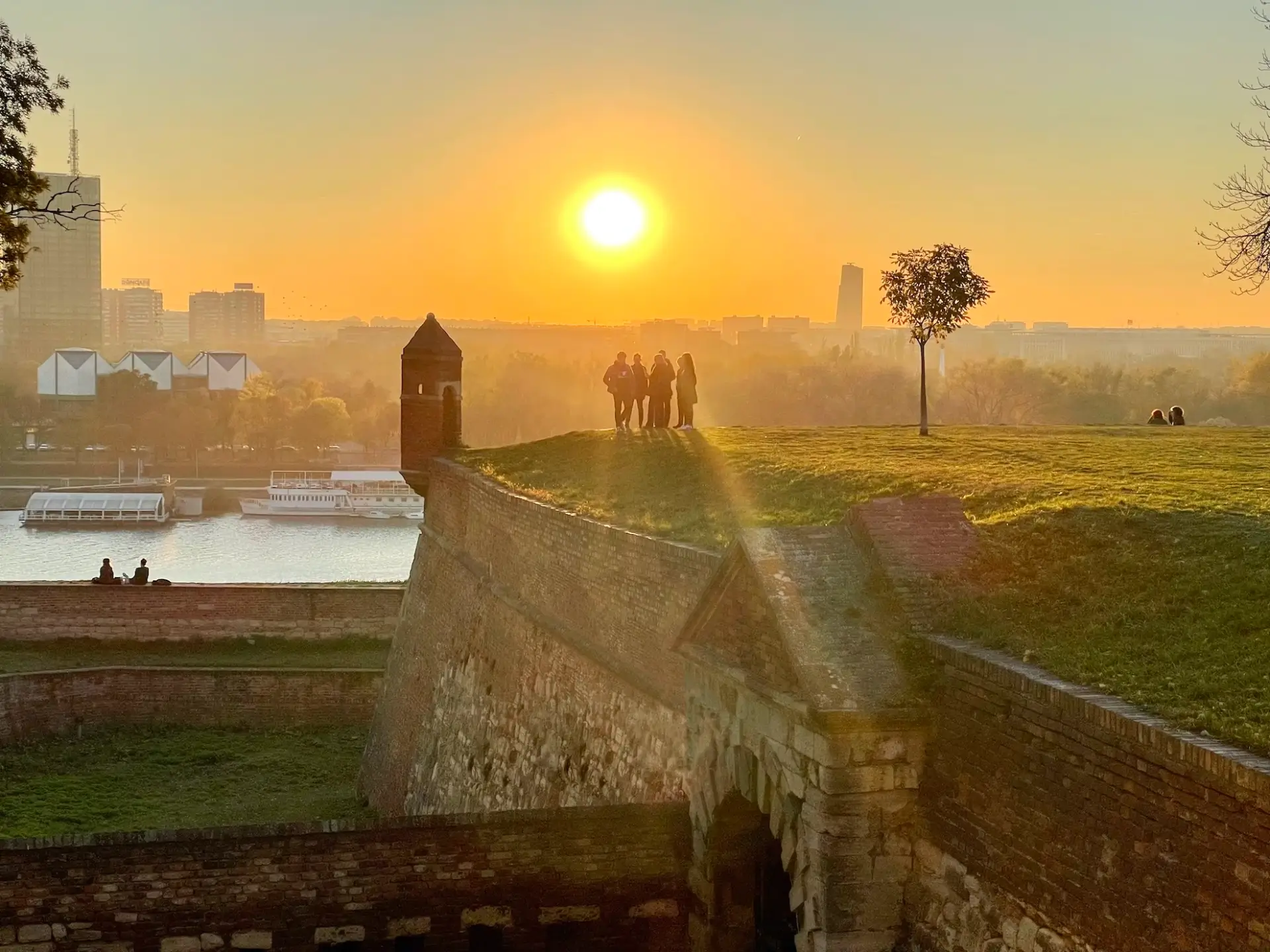
- Watch the sunset: The walls face west over the Sava and New Belgrade, so the sun goes down right in front of you. The terrace by the Victor Monument gets busy in the evening, especially in summer. For more space, walk along the walls a bit further.
- Concerts and events: The fortress hosts open-air concerts, exhibitions and festivals, mostly in the warmer months. Schedules change every year, so check what is on during your dates.
- Walk the walls: Paths run along and below the walls, with views of the rivers, Great War Island and the New Belgrade skyline. You can walk down to the Lower Town and on to the river promenade.
- Have a picnic or a coffee: Kalemegdan Park has shaded lawns and benches. There are also a few cafés and restaurants in and around the fortress, some with a view of the rivers.
- Take photos: The gates, the old walls, the Victor Monument and the view of the confluence are the classic shots. Early morning is the quietest time for photos without crowds.
The fortress also looks good from the water. A sunset boat ride on the Sava and Danube passes under the walls and the confluence, which gives you a view most visitors never see.
Tours That Visit Belgrade Fortress
You can explore Kalemegdan on your own, but there are few signs that explain what you are looking at. A guide helps you make sense of the layers of history. Most Belgrade walking tours end at the fortress, and some tours focus on it completely.
- A 3-hour small group walk through the city center that ends at the fortress suits first-time visitors who want the big picture.
- An underground tour takes you below the fortress to the Roman Well, a Cold War bunker and an old gunpowder cave, and ends with wine by the Sava. It suits people who have already seen the main sights.
- A Segway tour covers Knez Mihailova Street, the park and the fortress with less walking.
If you are more interested in the past than the views, look at Belgrade history tours, which often spend more time inside the fortress.
How to Get to Kalemegdan
Kalemegdan is in the old center of Belgrade, so most visitors walk there.
- On foot: From Republic Square, walk down Knez Mihailova Street. The pedestrian street ends at the park entrance, about 10 to 15 minutes away.
- From Skadarlija: The old bohemian quarter is around 15 to 20 minutes away on foot. Many people combine the fortress at sunset with dinner in Skadarlija.
- By public transport: Several bus and tram lines stop around the edges of the park. Routes and fares change, so check a local transport app before you go.
- By taxi or car: Taxis can drop you near the main park entrance. Parking in the center is limited, so walking or a taxi is easier.
Opening Hours, Tickets and Time Needed
- Entry: The park and the fortress grounds are free and open all day and night.
- Paid sights: The Military Museum, Nebojsa Tower, the Roman Well and the zoo each charge their own entry fee and have their own hours. Prices and hours change, so check before you go.
- Time needed: One to two hours is enough to walk the park, the Upper Town and the main viewpoints. Add another one to two hours if you go down to the Lower Town and visit a museum.
Best Time to Visit
Spring and early autumn are the most pleasant seasons, with mild weather and green trees in the park. Summer is hot, but the park has plenty of shade, and evenings on the walls are lively. Winter is cold and quiet, and the fortress can look good in snow.
For the time of day, come in the late afternoon and stay for sunset. Early morning is the best choice if you want the place almost to yourself. Weekends bring more locals and families, especially on warm days.
Tips for Visiting Kalemegdan
- Wear comfortable shoes. Paths are uneven in places, and the walk down to the Lower Town has steep slopes and stairs.
- Bring water in summer. There are cafés, but they are not everywhere in the fortress.
- Walking back up from the Lower Town is tiring. If you have limited mobility, stay in the park and the Upper Town, which are mostly flat.
- Cover your shoulders and knees if you want to go inside Ruzica Church or St. Petka Chapel.
- Combine the visit with nearby sights. Knez Mihailova Street, Kosancicev Venac and Skadarlija are all within walking distance. For more ideas, see the full list of Belgrade tours.
Kalemegdan FAQ
Is Kalemegdan free to visit?
Yes. The park and the fortress grounds are free. You only pay for the Military Museum, Nebojsa Tower, the Roman Well and the zoo.
What is the difference between Kalemegdan and Belgrade Fortress?
Belgrade Fortress is the walled complex with the Upper and Lower Town. Kalemegdan is the park around it. In daily speech, most people use “Kalemegdan” for the whole area.
How long do you need at Kalemegdan?
One to two hours for a walk through the park, the Upper Town and the viewpoints. Half a day if you also visit the Lower Town and a museum.
Is Kalemegdan open at night?
Yes, the park and fortress grounds are open around the clock. The main areas are lit and busy in the evening, especially in summer. The museums and the zoo close earlier.
Where is the best sunset spot at Kalemegdan?
The terrace by the Victor Monument has the classic view over the confluence of the Sava and Danube. It gets crowded, so the walls a little to the side are a quieter option.
Is Kalemegdan good for kids?
Yes. There is a lot of open space, the tanks and cannons in the moat are popular with children, and the zoo is inside the fortress area.
Plan Your Visit
Kalemegdan shows you Belgrade’s long history in one place, and it is still part of daily life in the city. Walk it on your own, come back for sunset, and if you want the stories behind the walls, join one of the walking tours above. If you only have a few days, the Belgrade city break guide helps you fit the fortress into your plan.