

This Belgrade full-day tour covers the city’s main sights in about 7 to 8 hours, from Belgrade Fortress to New Belgrade, Zemun and Dedinje. It suits first-time visitors and anyone short on time who wants to see a lot without planning transport. You ride between areas in an air-conditioned van or minibus and walk the parts that are best seen on foot.
Past travelers mention guides with deep knowledge of Serbian and Balkan history, who keep explaining things between stops too. Some also say the tour fits a lot of sights into one day.
Check dates and availability to find a day that fits your trip to Belgrade.
Belgrade Fortress
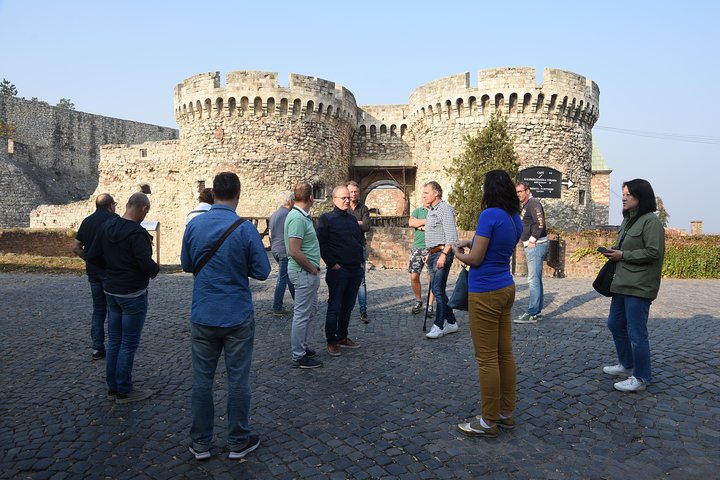
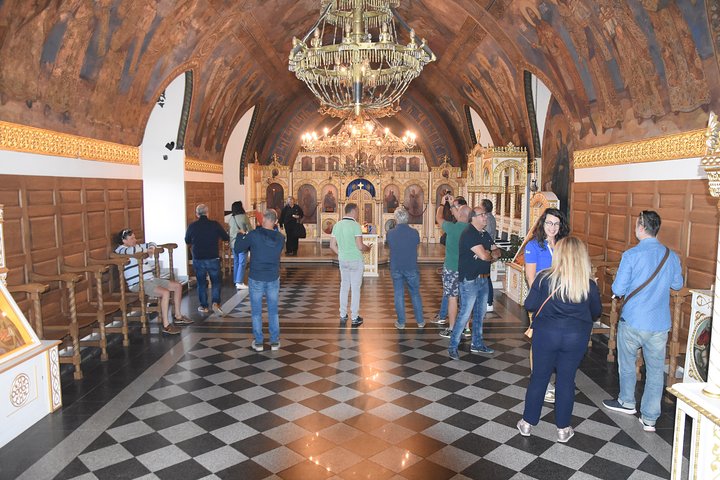
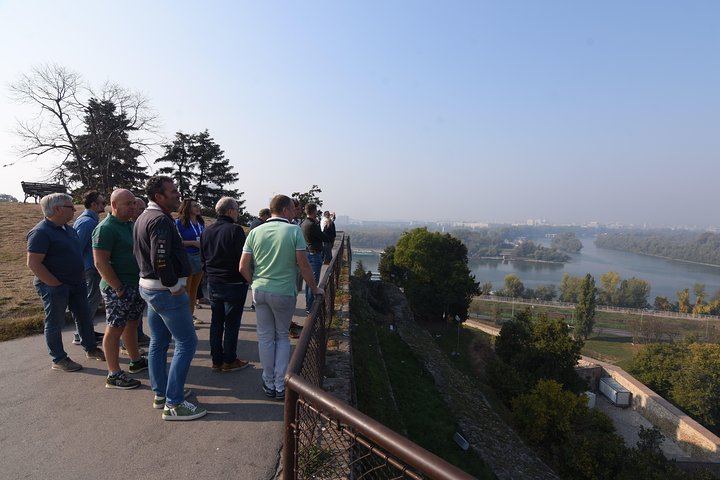
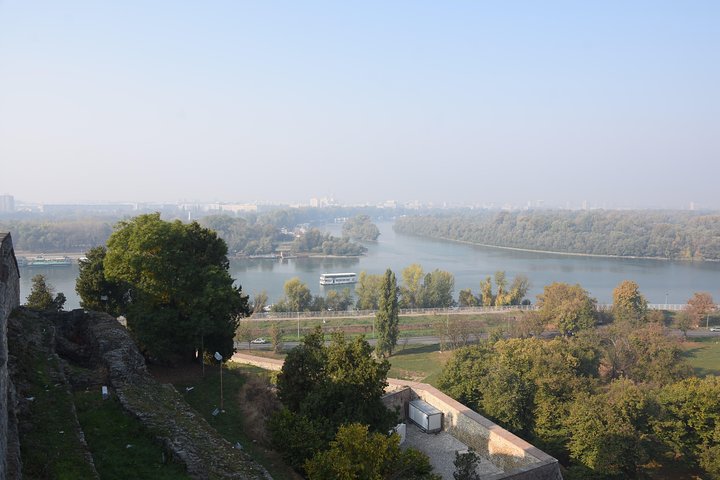
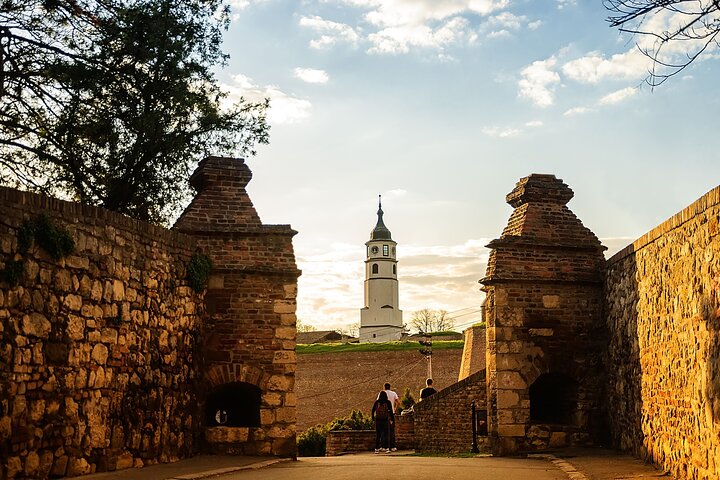
Your trip will begin with pick up from your hotel/accommodation in Belgrade. We’ll not stay in the vehicle for a long time since our first stop is Kalemegdan, the oldest and largest park in the city center, and the magnificent Belgrade Fortress. Starting from Leopold’s Gate, we will pass by the remains of the Roman castrum – Singidunum and the medieval walls built upon it – Zindan Gate, Despot’s Gate, Jakšića Tower, all dating back to the 15th century. We will visit two Orthodox churches in this part of the fortress: The Chapel of St Petka and Ružica Church (Virgin Mary Church). Entering the Upper town (Gornji grad), we will see the magnificent sight of the confluence of two rivers: the Sava and the Danube.
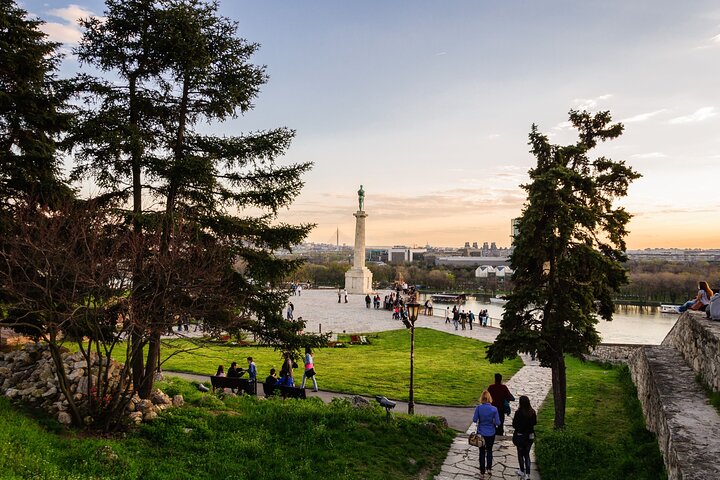
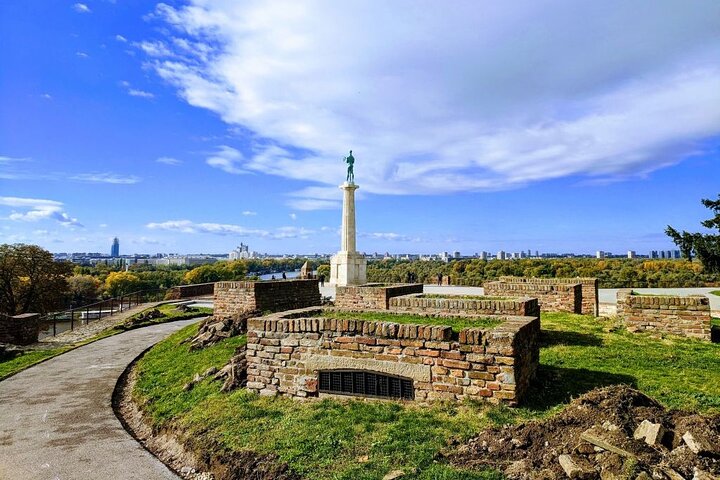
Pobednik
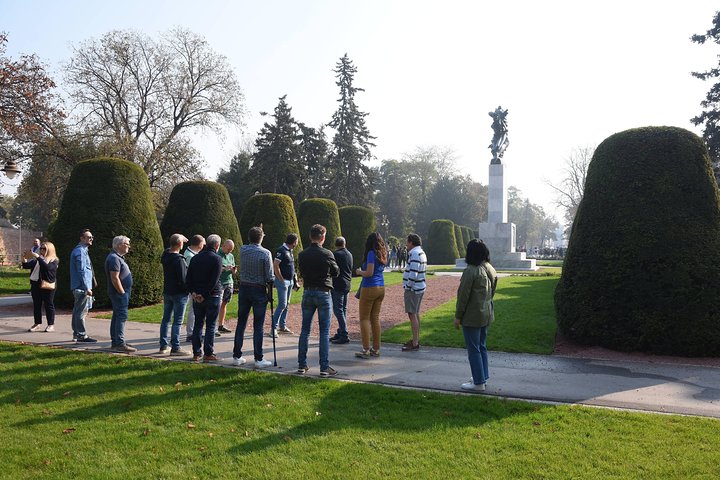
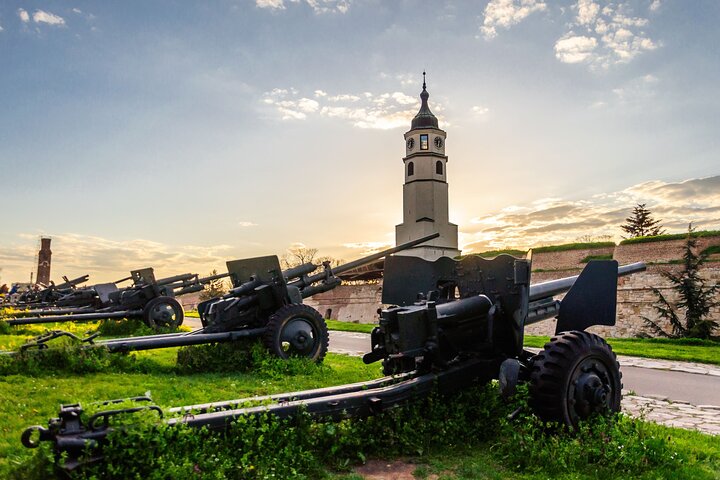
We will continue our walk through the Upper town: the Victor monument by world-renowned sculptor Ivan Meštrovic, one of Belgrade’s landmarks, the Roman well, the King’s gate, and the Sava promenade, the Damat Ali Pasha Tomb, Clock Gate, and Clock Tower. Passing by Military Museum and through Istanbul’s gate, we will leave the fortress behind us, entering Kalemegdan Park again. There is a Monument of Gratitude to France by Ivan Meštrovic in the park and many busts representing the famous Serbian man of letters. Here we’ll enter the vehicle again and continue with our tour.
Novi Belgrade
Continuing with our tour, we’ll have a chance to see New Belgrade’s impressive modern architecture. Built as a new part of the town, after WWII and during the socialist regime, it has many remarkable buildings. Ex-Central Committee of the Communist Party, Federal Executive Council, also known as Palace of Federation, Genex Tower or Western Gate of Belgrade, Sava Center, one of the biggest congress halls in this part of Europe, etc. Even the famous MOMA museum from New York dedicated a special exhibition called “Toward a Concrete Utopia” to New Belgrade’s architecture. New Belgrade will show you this city’s different face, including the buildings architecturally similar to former Eastern block “brutalist” style and modern business buildings built in recent decades. Finally, we will pass by the restaurant “Novak,” owned by the famous tennis player Novak Đoković’s family, and the Belgrade Arena, the most important sports venue in this part of Europe.
Zemun
After New Belgrade, we’ll reach Zemun, the northern area of Belgrade, characterized by its Central European appearance, charming quarters, cobblestone streets, and fish restaurants on the Danube River banks. We’ll pass by Avijatičarski Trg, where the old city of Zemun begins. With the massive monument to WWII heroes, this square is surrounded by Zemun’s oldest elementary school building and the Air Force Ministry, one of the finest examples of modernism in pre-war Yugoslav architecture. We’ll continue with our ride through the main street called Gospodska Street, where we have a chance to see some beautiful examples of Zemun architecture: the Post Office, Hotel Central, Town Museum, the House with a Sundial, etc.
Zemun
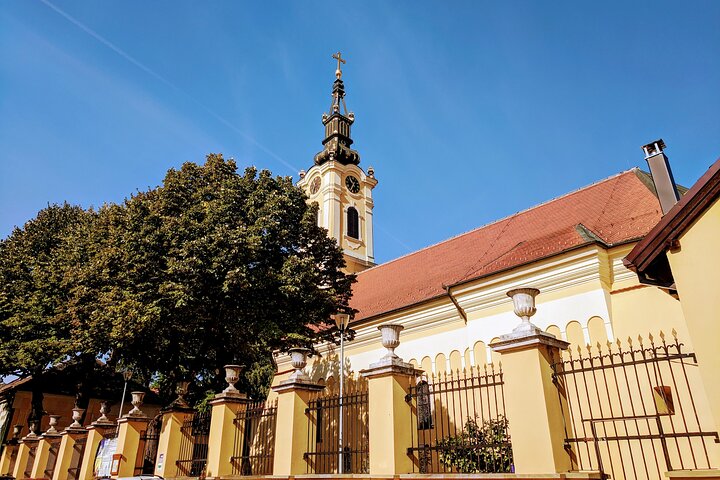
Following, we’ll leave the vehicle on the Danube bank and start our walking tour through the heart of old Zemun. We’ll continue along the bank of the Danube River – Zemun Promenade, where numerous old fish restaurants have nested under the shade of the century-old plane trees. Passing by the oldest Orthodox church of St. Nicholas from the 17th century, we’ll climb the Gardos Hill – the heart of Old Zemun. Its curvy cobblestone streets and small houses will give you the impression that Zemun is a melting pot of Mediterranean and Middle European cultures.
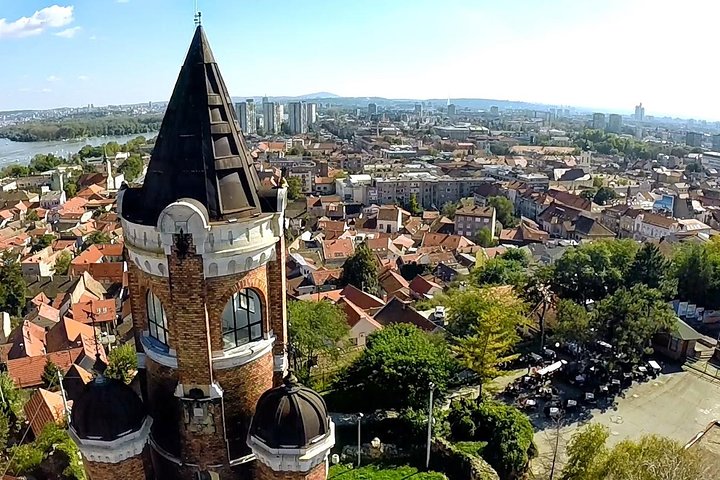
The Millenary Monument
When we reach the top of the hill, we’ll see the remains of the Zemun citadel, which still stands alongside the Millennium Tower in the center, Zemun’s central landmark. This romantic construction, built in a mixture of historical styles at the end of the 19th century, served to mark the southernmost point of the Austro-Hungarian Empire. The majestic view from the top of the tower will leave you breathless: Zemun Old Town from above, but also the confluence of the two rivers and the Belgrade Fortress on the other side.
Zemun
We’ll head down Gardos Hill to the town center and arrive at the Main City Square, where a daily market is located. Old buildings, including the Bishop’s Office and the Roman Catholic Church of the Blessed Virgin, dating back to the 18th century, surround the square. We’ll conclude our walking tour here, and you’ll have some free time for lunch, coffee, or simply to explore the streets of Zemun. Zemun offers a variety of lunch options. Perhaps you would like to sit in one of the restaurants overlooking Danube and try the freshly prepared Danube fish, or maybe you would like to taste one of the most famous pastry of the area, called “burek”, or you would like a quick portion of small rolls of seasoned ground meat, better known as “chevapchici”, the choice is yours.
Dedinje (Pass By)
After we cross the Gazela Bridge, we’ll head for Dedinje – Belgrade’s most luxurious residential area. Here, we’ll see some of the most beautiful mansions in the city, perfectly nestled in the greenery and serenity of Topčider Hill. Your guide will give you some interesting information about the properties’ history and what was happening with them during the very turbulent 20th century. We’ll see the country’s biggest football stadium, “Rajko Mitić Stadium”, the home of Red Star Belgrade. Red Star is the last club from Eastern or Southern Europe to win the prestigious Champions League. Their biggest competitor, Partizan Belgrade, has a stadium just across a small hill. Their rivalry is lasting for more than 70 years.
Church of Saint Sava
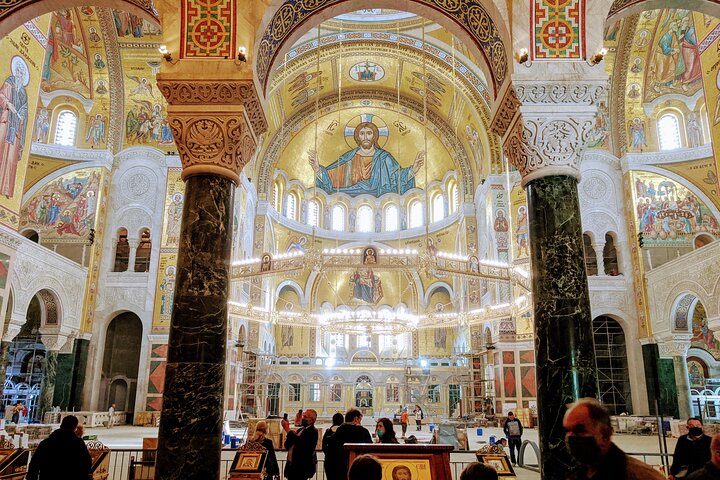
Coming from Dedinje, we’ll visit the Vračar area, where we can see one of Belgrade’s most prominent landmarks – The Church of St. Sava, one of the largest Orthodox churches in the world. The Temple of St. Sava features an enormous dome that is visible from all over the city. Size apart, the church is undeniably a highly impressive structure. Construction began in the 1930s at the site where the occupying Ottoman forces burned the relics of St. Sava (1175-1236). St Sava was the founder and the first archbishop of the independent Serbian Orthodox Church, and Serbians widely recognize him as one of the most important figures in Serbian history. Built in the Serbian-Byzantine style, the church occupies an area of 3,500 m² at ground level, with an additional 1,500 m² in the three galleries on the first level. At its highest point, the dome is 70 meters in height, while the central gilded cross is an additional 12 meters high, giving the Cathedral a total height of 82 meters.
Trg Slavija
When we finish with the Temple, we’ll enter the vehicle one more time. Through Slavija Square, we will enter Nemanjina Street with almost all state governmental institutions: Government Building, the Ministry of Foreign Affairs, the General Staff of Serbian Army, the Ministry of Railways, the Ministry of Finance, and the State Court, etc. – all being beautiful examples of Belgrade’s pre-war architecture.
Trg Republike
We’ll continue our ride and reach Republic Square, the heart of the capital, where the city’s most prestigious cultural institutions are situated. Here you will hear information about the most important buildings surrounding the Square: the National Museum and National Theatre, and a short explanation of why Prince Mihailo is one of the most important figures in Serbia’s modern history. Here, we will see the National Museum and the National Theater and Opera buildings, as well as an equestrian monument to the most important city and state ruler of the 19th century, Knez Mihajlo.
Terazije Fountain
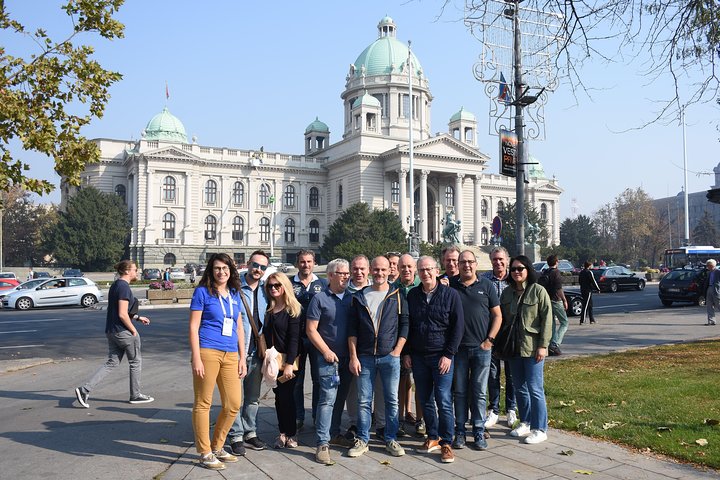
Next, we’ll reach Terazije Square, featuring a recognizable 19th-century white stone fountain and one of the most beautiful buildings in the city – the Moskva Hotel. We’ll pass by Nikola Pasic Square, with a monument to the first Prime Minister of the Kingdom of Yugoslavia, and finally we’ll stop in front of the Parliament Building.
House of the National Assembly of the Republic of Serbia
This is an excellent spot for making perfect photos. Here you will see the Old and New Royal Palaces and hear stories about the two dynasties that ruled Serbia in the 19th and 20th centuries. This is where your tour will conclude, and your guide will provide suggestions on how to spend the rest of your afternoon.
See available dates and the current price on Viator.


The tour takes about 7 to 8 hours and starts at 9:30 am. On the shared tour, pickup is 15 to 30 minutes before that.
The tour ends in front of the National Assembly in the city center. There is no drop-off back at your hotel, but the guide gives tips for the rest of your afternoon.
No. Food and drinks are not included, but you get about an hour and 15 minutes of free time in Zemun for lunch or coffee. Options include Danube fish restaurants, burek and ćevapčići.
There is a moderate amount of walking, mostly at Belgrade Fortress and in old Zemun, including cobblestone streets up Gardoš Hill. The tour is stroller accessible but not wheelchair accessible.
The shared tour needs at least 3 guests. If there are not enough, you are told at least 16 hours before and can choose to:
Yes. The private tour starts at 9:30 by default, and you can ask the operator for a different start time.
The information provided above is compiled from tour operator listings and customer reviews for informational purposes only. Tour details, pricing, inclusions, and availability are subject to change without notice. We strongly recommend that you verify all current information, including tour schedules, prices, cancellation policies, and specific requirements directly with the official tour provider before making any booking decisions. While we strive to keep this information accurate and up-to-date, we cannot guarantee the completeness or accuracy of all details. Please check the official tour page for the most current information and terms of service.